Enterprise SaaS platforms One platform, many organisations,
each kept separate.
Enterprise SaaS is software built once and run for many customer organisations, each with its own users, data and settings. GEMIS designs and develops these platforms — a different discipline from building a system for one business.
The situation
When one system has to serve many customers
A system built for one business can assume one set of users, one way of working and one database. A product offered to many organisations cannot. Separation, configuration, onboarding and releases have to be designed in — or every new customer becomes another custom project.
Signs you may recognise
- Each new customer needs its own copy of the software.
- A change made for one customer risks breaking another.
- Onboarding takes development time rather than configuration.
- Nobody can see which features customers actually use.
The difference
A custom system and a platform are different projects
| A system for one organisation | A platform for many | |
|---|---|---|
| Users | One organisation’s staff and partners. | Many organisations, each with its own people and roles. |
| Data | One business’s records. | Each customer’s records kept separate from every other’s. |
| Change | Shaped around one way of working. | Released to every customer — so planned, and sometimes staged. |
| A new customer | Not applicable. | Configured on the platform, rather than built from scratch. |
What GEMIS delivers
What a platform needs from the start
The parts of a multi-tenant product GEMIS designs and develops.
-
Multi-tenant architecture
Customer organisations share one platform while their data and settings stay apart.
-
Tenant configuration
Per-customer settings, so a new customer is set up rather than built for.
-
Role-based access
Permissions per role within each customer, so people see what they should.
-
Release management
Planned releases, so changes reach customers in a controlled way.
-
Extensibility
Defined ways to add features and integrations without forking the product.
-
Usage insight
A view of which features are used, to inform what the product does next.
How the engagement works
From product idea to running platform
Platform work begins with the product and its customers, not with a single client’s process.
-
Define the product
Who the customers are, what they share and where they differ.
-
Design the architecture
Tenancy, identity, configuration and data separation.
-
Build the core
The shared product, and the first customers’ configuration.
-
Release and onboard
A release process and an onboarding path that do not need development.
-
Maintain and evolve
Updates, support and a roadmap informed by how the product is used.
Evidence from real projects
The closest evidence
Projects whose recorded scope shows this work. All case studies
ManaGEM is a GEMIS product you can use, not a service. Its internal architecture is not described here, so it is not offered as proof of every capability above.
Business management software — compact ERP
ManaGEM
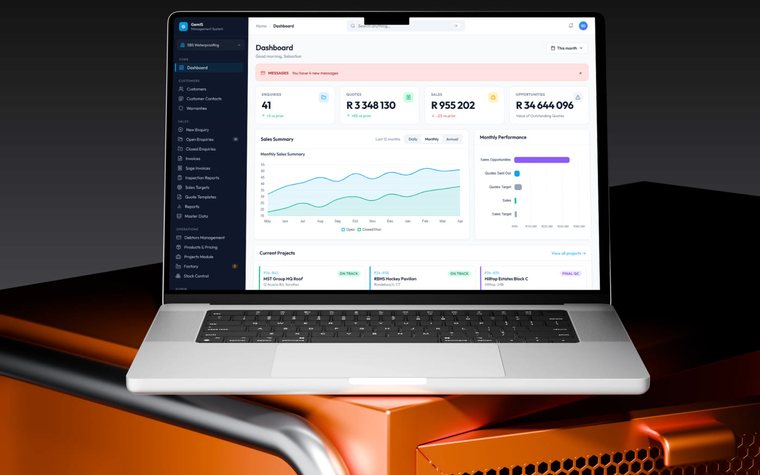
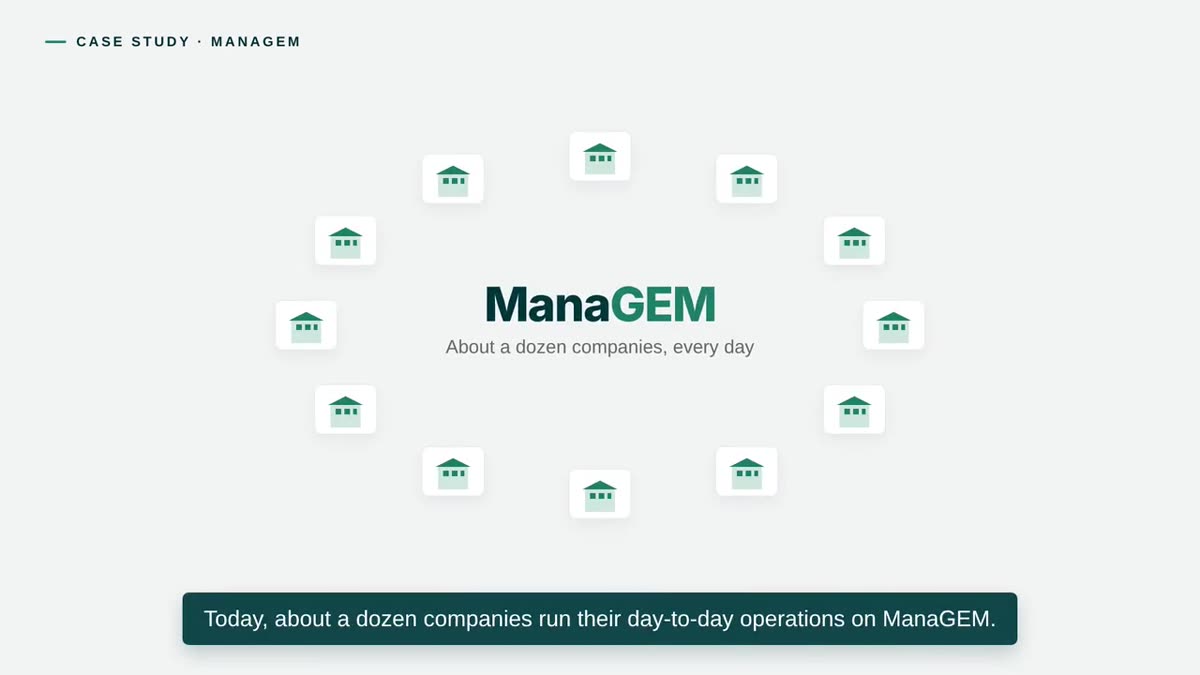
GEMIS’s own business-management product, generalised from the system built for SBS Waterproofing and used by about a dozen companies — evidence of GEMIS developing and maintaining one product for many businesses.
Read about ManaGEMQuestions
Common questions
The questions that come up first about Enterprise SaaS platforms. Anything not answered here is worth raising in a discovery conversation.
What is the difference between a SaaS platform and a custom system?
A custom system serves one organisation and is shaped around its way of working. A platform serves many organisations from one product, with each customer’s data, users and settings kept separate. Tenancy, configuration and releases have to be designed in from the start.
How is one customer’s data kept separate from another’s?
Through the architecture: separation is designed into the data model, access control and identity from the start. The right approach depends on the product and its customers, and is decided during design.
Can new customers be onboarded without development?
That is a design goal of a platform. Where a customer’s needs fall within the product’s configuration, onboarding is set-up rather than build; needs outside it become product decisions.
How are new features released?
Through a release process agreed with you, which can include releasing a change to some customers before others.
Is ManaGEM an example of this?
ManaGEM is GEMIS’s own business-management product, used by about a dozen companies. It shows our experience of developing one product for many businesses. If you want a ready-made system rather than a new platform, start with the ManaGEM page.
Who owns a platform GEMIS develops?
Ownership and licensing are set out in the agreement for that engagement, before development starts.
Enterprise SaaS platforms
Planning software for many organisations?
Tell us who the customers are and what the product has to do for them. We come back within two working days with a short written view and a time to talk.